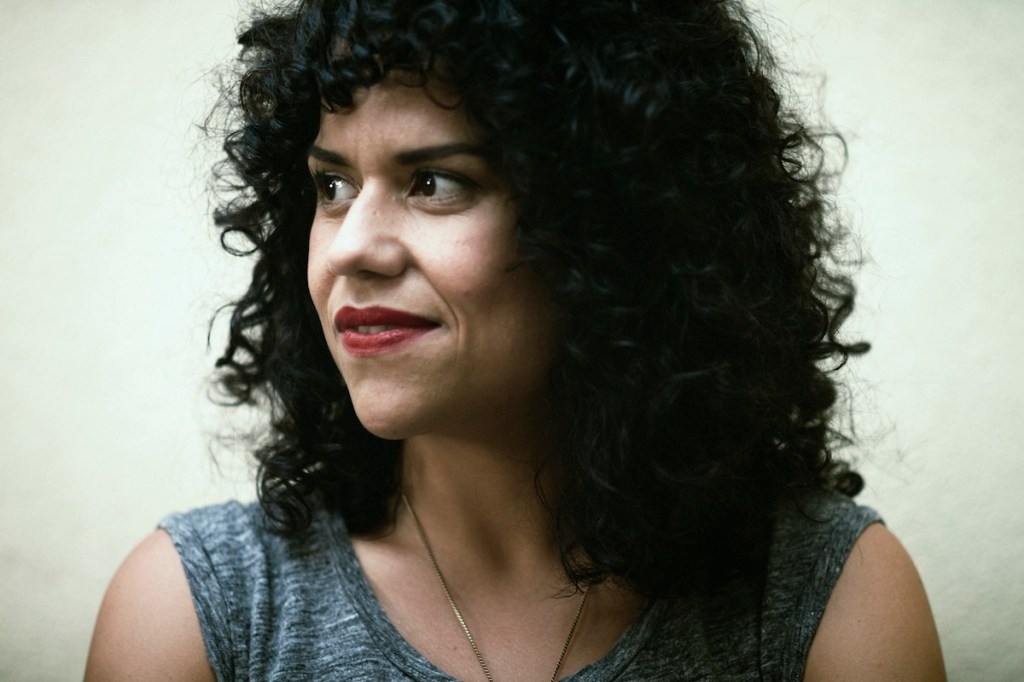
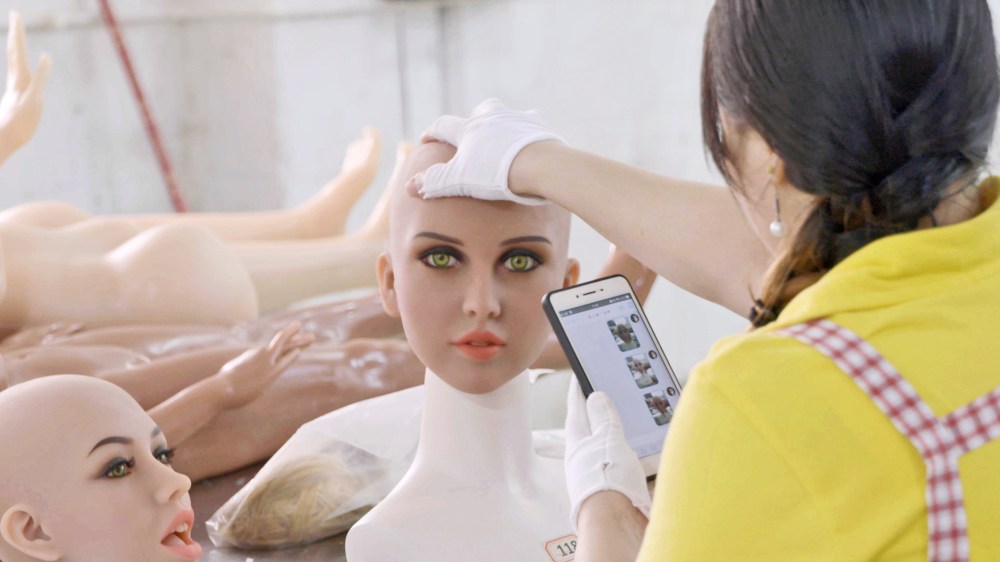
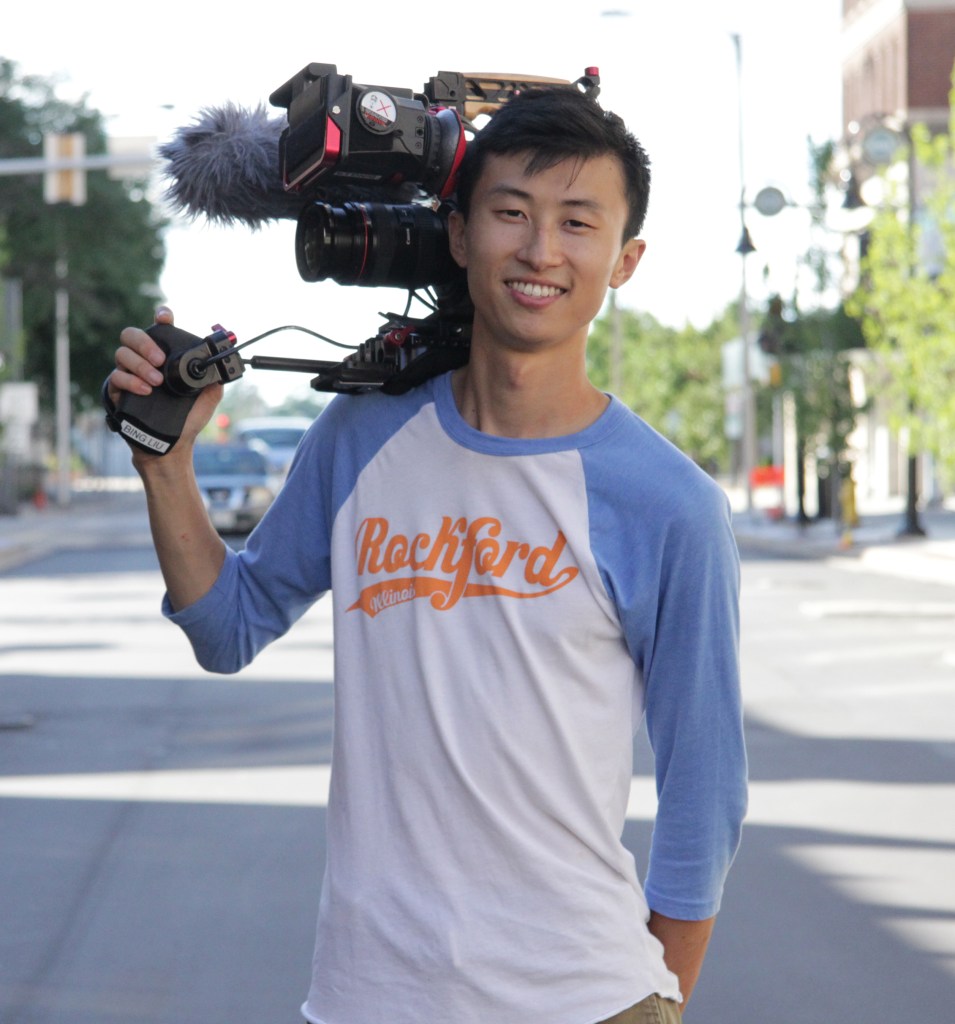
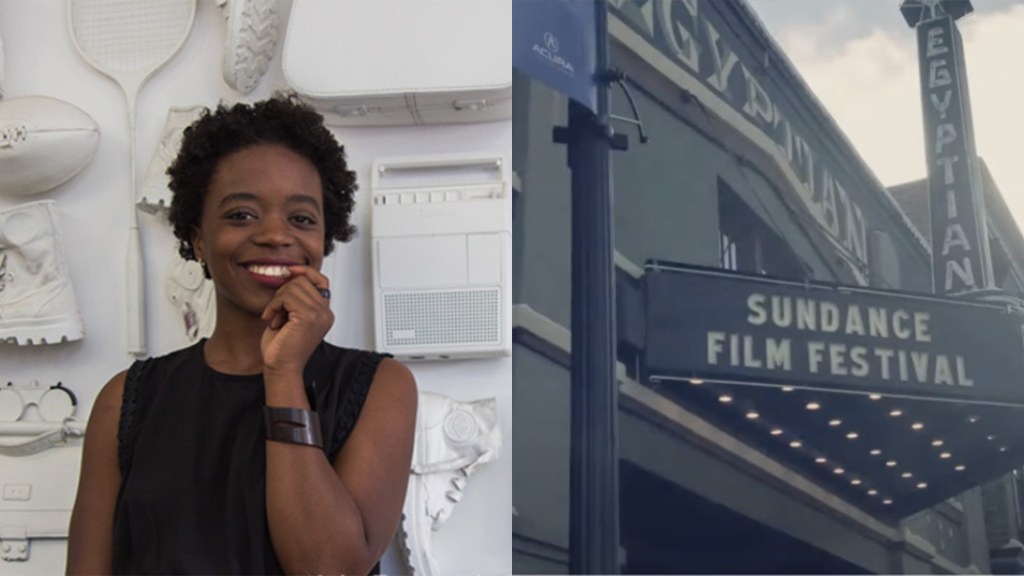
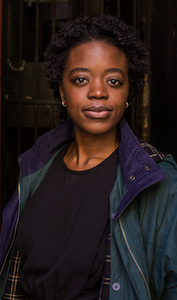
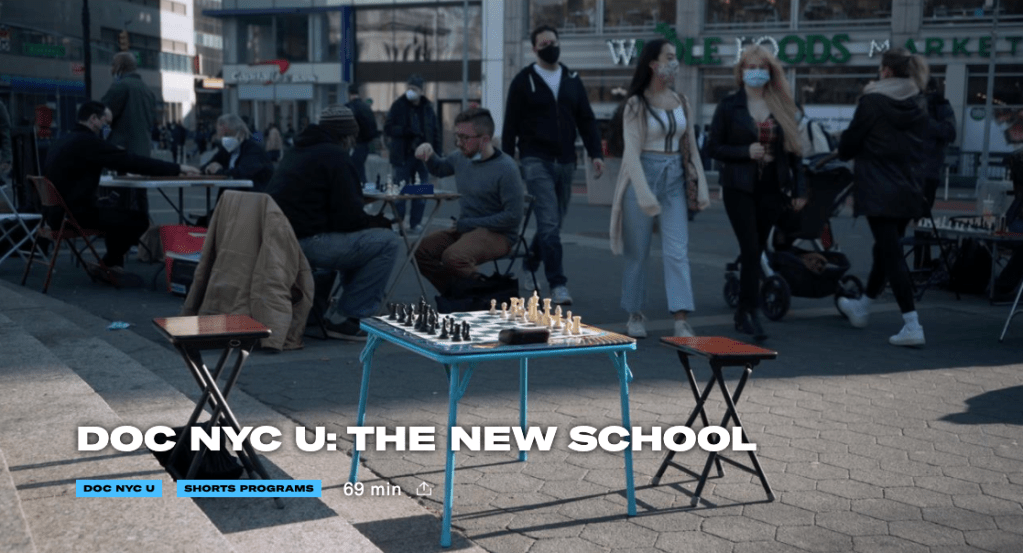
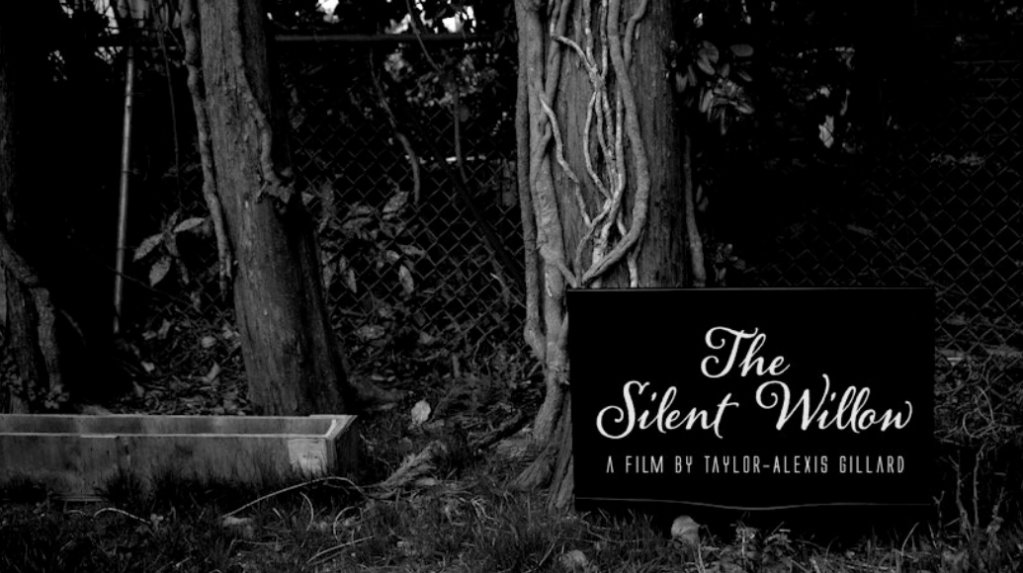
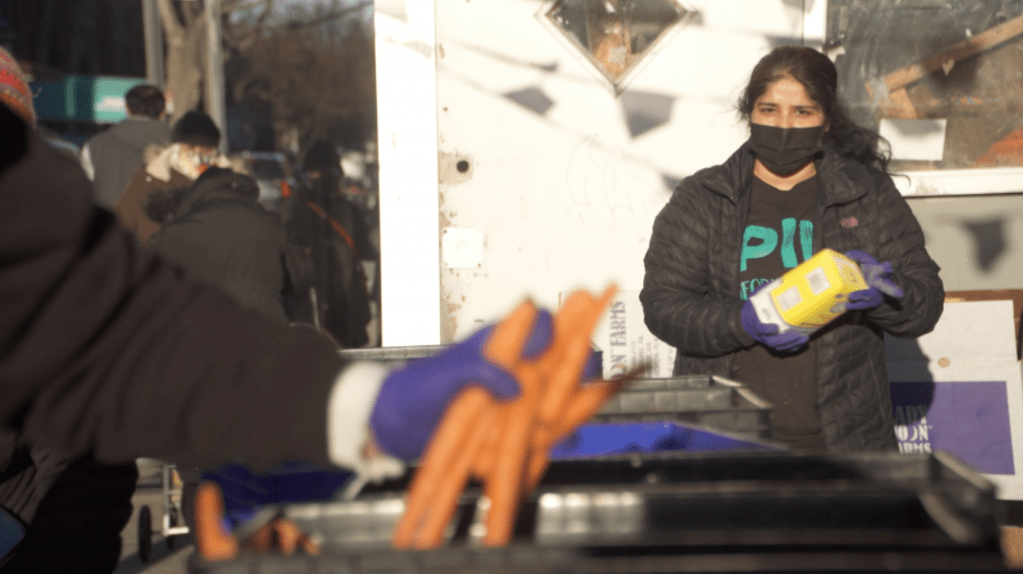
It is with great pleasure that I write to share some good news: Our beloved Documentary Studies program will be featured at this year’s (Online) DOC NYC, with four films by the last year’s graduate filmmakers in the ‘University Showcase‘. Kudos to our outstanding students Valerie Neck, Taylor-Alexis Gillard, Samantha Schulte and Simon Tchoukriel whose films are in the showcase, and who managed to complete their work under very difficult circumstances.
“All That Is” by Valerie Neck“The Silent Willow” by Taylor-Alexis Gillard“That Change I Have Seen” by Samantha Schulte“Empire State of Chess” by Simon Tchoukriel
Please share widely, and tune in to enjoy the work of our exceptional New School filmmakers and alumni!
Simon Tchoukriel is a filmmaker from France who originally moved to New York to play college soccer. In his work, Simon focuses on collectives and subcultures with a passion for games, whatever they may be, and what these activities tell us about our society at large.
Empire State of Chess is Simon Tchoukriel’s Doc Studies end of year film.
The game of chess has been bringing New Yorkers together for years in parks, squares, cozy clubs and tournament halls. But how can this beloved pastime survive amid a pandemic? Meet New York City’s most interesting pawn pushers, grandmasters, club owners and street players who keep the hope, and the game, alive.
The Graduate Certificate in Documentary Media Studies is proud to present its fourteenth annual festival of original short films made by students in the classes of 2020 and 2021. Over a period of four days, we will screen original documentary shorts and engage in conversations with our wonderful graduates, whose films tackle our present realities with a keen sense of urgency and care.
Register here for the festival Q&As with student filmmakers.
“Godmilow’s film re-makes Farocki’s film… in order to study it, to take apart its various phases, to understand it, to think about it…. It is an act of remembering…. Film which can break reality into pieces… can also demonstrate for us the processes of memory, of re-thinking the past and turning it—not into nostalgia—but into a lesson for the future.“ —Tom Gunning
“A bracing exercise in political filmmaking and pedagogy… resurrecting the Brechtian frontal attack, both on an economic system intent on the manufacture of death and on the complacency of documentary realism.” —Michael Renov
Ever since Jill Godmilow began making documentaries in 1966, her work has broken barriers. Her early feminist films helped pave the way for more films made by, for, and about women. In her groundbreaking Far From Poland she explored the rise of the Solidarity movement at a distance, incorporating an unprecedented array of experimental approaches—staging, reenactment, interviewing, archival films—and thereby fostering a post-realist movement within documentary filmmaking. Her criticism of documentary’s “pornography of the real” has won her friends and enemies, challenging left liberal documentary to re-think its strategies. What Farocki Taught (1998) is one of her most controversial films, a re-make and interrogation of Harun Farocki’s Inextinguishable Fire about Dow Chemical’s creation of napalm B during the Vietnam War. Since her retirement from teaching at Notre Dame University, she has been busier than ever, producing and directing new films and writing a book for students about the documentary. Her recent short film, On the Domestication of Sheep (2019), is a quirky surprise—an animated film that delivers a blow to gendered capitalism with ironic wit and powerful punch. Godmilow remains tireless in her efforts to keep the debate over documentary ethics as stimulating as ever. She will discuss these two short films, radically different in style and tone from each other, and then speak about her new book and film-in-progress.
Jill Godmilow
Jill Godmilow is an internationally known, award-winning independent filmmaker who has been producing and directing nonfiction and narrative work on feminist, gay, labor, and art issues for decades. In 2003, her Academy Award-nominated feature Antonia: A Portrait of the Woman was added to the National Film Registry at the Library of Congress. She is Emerita Professor at the University of Notre Dame where she taught film production and critical studies courses in the Department of Film, Television & Theatre for twenty years. She is probably best known for her radically deconstructive approach to the documentary and juxtaposition of fact and fiction. In 2020 she began work on a new film, For High School Students—Notes from the Vietnam War. She has just finished writing Kill the Documentary—A Letter to Filmmakers, Students and Scholars, forthcoming from Columbia University Press.
Please join us for this online screening and Q&A, hosted and moderated by Deirdre Boyle, Associate Professor in the School of Media Studies at The New School.
“Documentary, personal essay, historical reconstruction, film poem, therapeutic exercise—”The Missing Picture” is something of all of these.“ –Jonathan Romney, Film Comment
“The audacity of “The Missing Picture” … is equaled only by its soulfulness.” –Manohla Dargis, The New York Times
Rithy Panh is Cambodia’s leading filmmaker and foremost chronicler of the genocide that decimated his nation when Pol Pot tried to create an agrarian utopia through terror. Acclaimed for his groundbreaking documentaries about perpetrator guilt, Panh’s best known film is a very personal one, his Academy Award-nominated memoir,The Missing Picture. His quest to find a missing picture is, on a literal level, a search for footage shot by a Khmer Rouge cameraman, but the “missing picture” is a conceit that evokes all that is absent and inaccessible for him. It took years for him to assemble an archive of propaganda films that expose Khmer Rouge ideology and to envision clay figurines and dioramas that depict horror without turning viewers into voyeurs and his film into what Jill Godmilow has called “the pornography of the real.” History, memory, and art all come together in a film that demonstrates the power of art to respond to genocide with beauty and wisdom.
Panh was 13 when his family was evacuated to rural Cambodian where all but one of them died of starvation, over-work, disease, and despair. Rithy survived and escaped to a refugee camp and then exile in France. Educated at l’IDHEC, the prestigious national film school in Paris, he returned to Indochina where he has made more than 20 award-winning feature films over the past 30 years. Although he has collaborated with cinema luminaries like Angelina Jolie and Isabelle Huppert, Panh considers himself essentially a documentary filmmaker. He is enigmatic, unpredictable, and indefatigable in his quest to heal his nation and make new films.
Deirdre Boyle
Associate Professor of Media Studies Deirdre Boyle has taught at the New School for over 40 years. She is the author of the forthcoming Ferryman of Memories: The Films of Rithy Panh (Rutgers University Press). Her essays on Panh’s groundbreaking films led her to step back to examine his entire oeuvre, which took her to Phnom Penh, Siem Reap, Geneva, and Toronto and immerse herself in the cinema of a brilliant but haunted artist. Victor Torres Rodriguez is Deirdre’s research assistant and an invaluable editor and first reader uniquely qualified to interview her about Panh’s work. He joins a terrific group of graduate assistants, colleagues, and friends who have contributed their support and knowledge about colonialism, genocide, and trauma to Ferryman of Memories.
“A fascinating, absorbing and instructive tale, full of delayed revelations and subtle pleasures.“ –Jonathan Rosenbaum, The Chicago Reader
“A profoundly gripping film with a cumulative impact that may well wipe you out.” –Bilge Ebri, New York Magazine
The Cats of Mirikitanibegan as a portrait of Jimmy Mirikitani, a homeless Japanese-American street artist living in New York City, but then it morphed into a stunning personal story of an unlikely relationship that confronted one of America’s long-standing prejudices and initiated a healing process catalyzed by the events of 9/11. This film was Linda Hattendorf’s directorial debut, and she worked closely with editor Keiko Deguchi to structure a film in which she reluctantly became a character. Cats premiered at the Tribeca Film Festival in 2006 where it won the Audience Award. The film was later broadcast on the PBS series “Independent Lens,” toured theatrically around the globe, and was invited to over 100 film festivals.
AWARDS: Best Picture Japanese Eyes, Tokyo International Film Festival; Best Documentary, Durban International Film Festival; Norwegian Peace Film Award, Tromso International Film Festival, among over 30 others.
Linda Hattendorf
Linda Hattendorfis much in demand as an editor today, and her work has been broadcast on PBS, A&E, TCM, and The Sundance Channel, and screened in various theatrical venues and film festivals. She has collaborated with direct cinema master Barbara Kopple and did research for PBS’s house documentarian Ken Burns. She served as cameraperson on William Greaves’ celebrated Symbiopsychotaxiplasm Take 2 ½ and editor for his PBS special Ralph J. Bunche: An American Odyssey. She is currently editing Photographic Justice: The Corky Lee Story about the legendary photojournalist of Asian American issues who died recently of covid-19. She has an MA in Media Studies from the New School and briefly taught editing for the DocStudies Certificate.
BIG CONGRATS to our Doc Studies alumnus, Igor Myakotin, co-producer of “Welcome to Chechnya,” which has been shortlisted for not one, but TWO Oscars: Documentary Feature and Visual Effects (a first ever for a documentary)!
Igor and director, David France, joined us for a Doc talk back in November 2020.
“Examines the history of socialism and why so many Americans have been conditioned to reject a philosophy that’s in their best interests”
– Cassie Da Costa, Daily Beast
THE BIG SCARY “S” WORD delves into the rich history of the American socialist movement and journeys with the people striving to build a socialist future today. With inequality growing, a climate catastrophe looming, and right-wing extremism ascending around the world, many Americans are wondering whether capitalism is to blame. But what is the alternative? Socialism is plagued by conflicting definitions. Is it dictatorship or democracy? Norway or Venezuela? Reform or revolution? This film explores where American socialism has been, why it was suppressed, and imagines what a renewed American socialism might look like.
AWARDS: Official Selection: AFI Fest 2020, Official Selection: Mill Valley Film Festival 2020, Official Selection: DOC NYC 2020, Official Selection: HotDocs 2020, Official Selection: DocLands 2020.
Yael Bridge
Yael Bridge is an Emmy-nominated documentary filmmaker based in Oakland. Her films have shown at major film festivals nationally and internationally. She produced Left on Purpose, winner of the Audience Award at DOC NYC, and most recently produced Saving Capitalism with Robert Reich, nominated for an Emmy Award in Business and Economics. As Director of Productions at Inequality Media, Yael has made numerous viral videos tackling complex political issues that have garnered over 200 million views on social media. She holds an MFA in Documentary Film and Video from Stanford University, a Graduate Certificate in Documentary Studies and an MA in Media Studies from the New School.