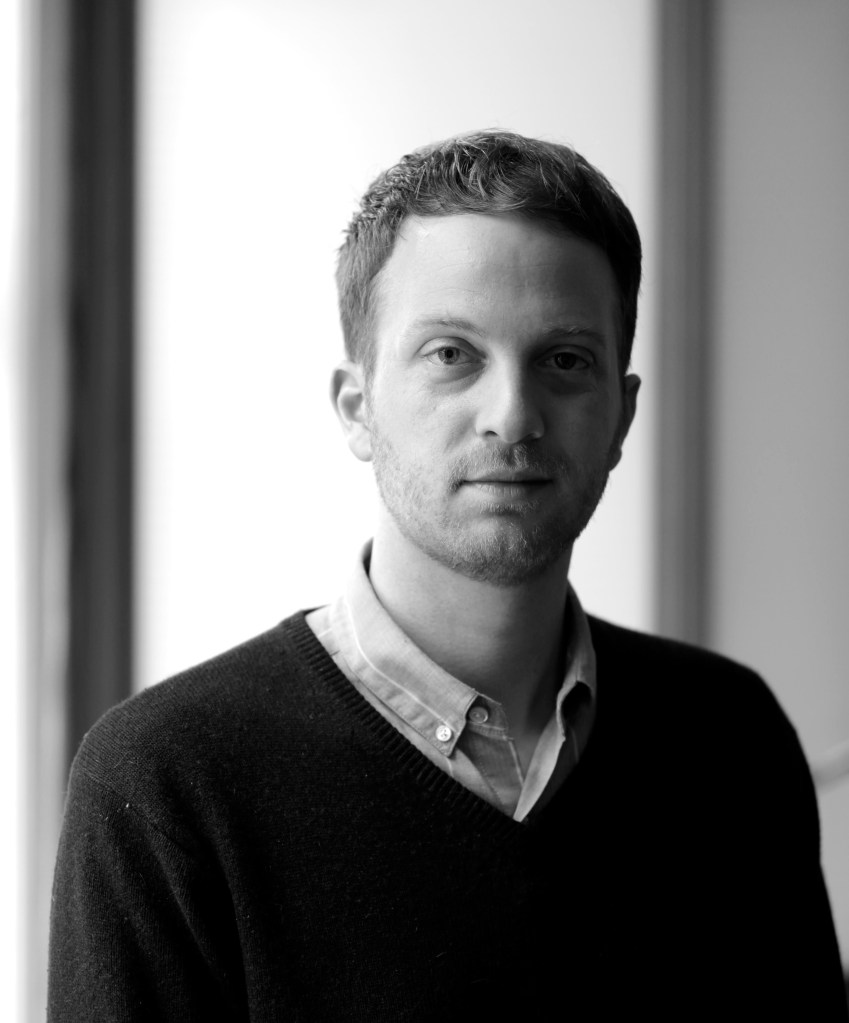
Doc Talk: RECORDER: THE MARION STOKES PROJECT with filmmaker MATT WOLF

“Outstanding… An information revolutionary, Stokes, despite her decades of isolation, touched the nerve center of the times.” – Best Films of 2019,  New Yorker

“Weirdly exhilarating… Enlightening and the stuff of madness.” Critic’s Pick – New York Times

“The Information Age has found a startling, eccentric heroine in the subject of Matt Wolf’s eye-opening documentary.” – LA Times

Marion Stokes was secretly recording television twenty-four hours a day for thirty years. It started in 1979 with the Iranian Hostage Crisis at the dawn of the twenty-four hour news cycle. It ended on December 14, 2012 while the Sandy Hook massacre played on television as Marion passed away. In between, Marion recorded on 70,000 VHS tapes, capturing revolutions, lies, wars, triumphs, catastrophes, bloopers, talk shows, and commercials that tell us who we were, and show how television shaped the world of today. 

Before “fake news” Marion was fighting to protect the truth by archiving everything that was said and shown on television. The public didn’t know it, but the networks were disposing their archives for decades into the trashcan of history. Remarkably Marion saved it, and now the Internet Archive will digitize her tapes and we’ll be able to search them online for free. 

This is a mystery in the form of a time capsule. It’s about a radical activist, who became a fabulously wealthy recluse archivist. Her work was crazy but it was also genius, and she would pay a profound price for dedicating her life to this visionary and maddening project. 

Matt Wolf is an award-winning filmmaker in New York whose feature documentaries include Wild Combination, about the cult cellist and disco producer Arthur Russell and Teenage, about early youth culture and the birth of teenagers. His new film Spaceship Earth about the controversial Biosphere 2 experiment is premiering at Sundance 2020. Matt’s short films include I Remember, about the artist and poet Joe Brainard, Time Magazine’s The Face of AIDS about a controversial Benetton advertisement, and Bayard & Me, about the civil rights activist Bayard Rustin. He is also the director of HBO’s It’s Me, Hilary and is the co-curator of film for the 2019 Whitney Biennial. He is a Guggenheim Fellow.

Please join us for this screening and Q&A, hosted and moderated by Amir Husak, Director of Documentary Studies and Assistant Professor in the School of Media Studies.

Doc Talk: Nico Pereda (Dec.5, 2019)

Andrea Bussmann and Nico Pereda’s Tales of Two Who Dreamt is set in a housing block in Toronto. A Roma refugee family is hired as actors to work on a fiction film.  We see them rehearsing stories of their past while reflecting on the upcoming hearing about their residency status. The stories are spun into legends, whereby the boundaries between reality and fiction, and the documented and the performed no longer apply.  There’s the tale of the dog left to starve in an empty flat, the tale of the lawyer’s child, and the tale of the boy who woke up to find himself transformed into a bird. You’d think all these stories could make for a mesmerising film and you’d be right, but what sort of film would it be? An observational documentary, a family portrait they themselves help mould, a Kafkaesque fairy story, the making-of the same? But there are no clear explanations here, for it is also a place of infinite shifting boundaries. If you want answers, you might as well ask the devil.

Nicolás Pereda is a filmmaker whose work explores the everyday through fractured and elliptical narratives using fiction and documentary tools. His work has been the subject of more than 20 retrospectives worldwide in venues such as Anthology Film Archive, Pacific Film Archive, Jeonju International Film Festival and TIFF Cinematheque. He has also presented his films in most major international film festivals including Cannes, Berlin, Venice, Locarno, and Toronto, as well as in galleries and museums like the Reina Sofía in Madrid, the National Museum of Modern Art in Paris, the Guggenheim and MOMA in New York, and in television stations such as HBO, Turner, MVS, Netflix, and ISat. In 2010 he was awarded the Premio Orizzonti at the Venice Film Festival.

Doc Talk: Ian Soroka (Nov. 4, 2019)

GRAND PRIX – DOCLISBOA – City of Lisbon Award for Best International Competition Film

GRAND PRIX – DOXA Doc. Film Festival Vancouver – Best Feature Documentary Award

The film’s attractively verdant visuals are layered with a variety of voices exploring the forest’s past and present, with particular focus on its role as a commune for partisans during WWII. – Matt Turner, The Brooklyn Rail

Tactfully, Soroka keeps subjects at a distance in the frame, mostly using off-screen interviews as voiceover, side-stepping both conventional technique and creating a sort of unified disembodied voice of the setting. – Adam Cook, MUBI

Drifting through the densely forested landscape of southern Slovenia—GREETINGS FROM FREE FORESTS, like a lifting fog, reveals a refuge of embedded historical memory. The film travels alongside the testimonies of local hunters, foresters, cavers, and foragers among others—orbiting around an absence left by radical struggle after it has come to fruition and since faded. During WWII, this forest served as a sanctuary for the Partisan Liberation Front, who were resisting the Fascist occupation of Yugoslavia. Remnants of this event can still be found throughout the forest in various states of decay, but also within images that sought to preserve the revolution’s emancipatory energy for future generations; images now stored in an underground film archive buried within the forest itself, depicting both the violence and the hope that came with radical change.

Ian Soroka (b. 1987) works in non-fiction forms of film and of Colorado in Boulder, in Prague at FAMU, and completed an M.S. in Art, Culture and Technology at MIT. Ian is a MacDowell Colony Fellow, a Princess Grace Foundation-USA Award recipient, and a Fulbright Fellow in Slovenia, where he was a guest researcher at the Slovenian National Film Archive and Cinematheque. His work has screened internationally in festival, gallery and museum contexts including: DocLisboa, Art of The Real, The Doc’s Kingdom Film Seminar, Rencontres Internationales, Dokufest, DokFest München, and Kinoteka, Ljubljana. Ian is from western Colorado and is based in the San Francisco Bay area.

Doc Talk: Penny Lane (Oct.14, 2019)

As a history lesson every bit as clarifying as it is cockeyed, “Hail Satan?” possesses unarguable value. – Ann Hornaday, The Washington Post

Chronicling the extraordinary rise of one of the most colorful and controversial religious movements in American history, Hail Satan? is an inspiring and entertaining new feature documentary from acclaimed director Penny Lane (Nuts!, Our Nixon). When media-savvy members of the Satanic Temple organize a series of public actions designed to advocate for religious freedom and challenge corrupt authority, they prove that with little more than a clever idea, a mischievous sense of humor, and a few rebellious friends, you can speak truth to power in some truly profound ways. As charming and funny as it is thought-provoking, Hail Satan? offers a timely look at a group of often misunderstood outsiders whose unwavering commitment to social and political justice has empowered thousands of people around the world.

PENNY LANE (Director) has been making award-winning, innovative nonfiction films for more than a decade. Her third feature documentary, The Pain of Others (2018), debuted at the International Film Festival Rotterdam and went on to Sheffield and BAMcinemaFest. Her previous feature documentary Nuts! (2016) premiered at Sundance, where it won a Special Jury Prize for Editing. Her debut feature documentary, Our Nixon (2013), premiered at Rotterdam, had its North American premiere at SXSW, won the Ken Burns Award for Best of the Festival at Ann Arbor, and was selected as the closing night film at New Directors/New Films.

Festival screenings of her works have spanned the independent and experimental film worlds, including Sundance, Rotterdam, Images, Impakt, Hot Docs, Full Frame, CPH:DOX and Oberhausen. She has been awarded grants from Sundance, Creative Capital, Cinereach, TFI Documentary Fund, Jerome Foundation, Catapult Film Fund, LEF Foundation, New York State Council on the Arts, and many other organizations. She is possibly most proud, however, of having been named “Most Badass!” at the Iowa City Documentary Film Festival in 2009.

Please join us for this screening and Q&A, hosted and moderated by Amir Husak, Director of Documentary Studies and Assistant Professor in the School of Media Studies.

Doc Talk: Samara Chadwick (Oct.7,2019)

“1999 is one of the most haunting documentaries I’ve ever seen… a philosophical meditation on memory, sorrow, uncertainty, adolescence, and rebellion”  – Astra Taylor

“A profoundly personal but strikingly universal diaristic look back at a particular place and time. Surprising, tender, and charming.” – Pamela Cohn, Filmmaker Magazine

“A powerful meditation on trauma and resilience. Unlike anything I’ve seen this year.” – NOW Magazine

When death haunts a high school in a small town in the late 1990s, everyone is forever transformed. In this gentle, prismatic film, Samara returns to the town she fled as a teen to re-immerse herself in the memories still lurking there, in its spaces and within the dusty boxes of diaries, photos and VHS tapes. 1999 is not a ghost story, but the ghosts are palpable at every turn. The snow-covered streets, the school’s hallways and lockers are preserved as in a dream. 

The absences left by the relentless teenage suicides still shimmer with questions, trauma and regret. Samara encounters people who are as breathtaking as they are heartbroken, and, finally, 16 years later, the community strengthens itself by sharing the long-silenced memories. Ultimately the film weaves together multiple voices in a collective essay on how grief is internalized—and how, as children, we so painfully learn to articulate our desire to stay alive.

Samara Chadwick is a scholar, filmmaker and curator. She has a PhD in Cultural Studies from the Universidade Federal Fluminense in Rio de Janeiro and Paris III – Sorbonne Nouvelle. Samara’s first feature documentary, 1999, produced by Parabola Films (Canada), Beauvoir Films (Switzerland), and the National Film Board of Canada, premiered in 2018 at Visions du réel, and has since played festivals worldwide including HotDocs, DokuFest Kosovo, BAFICI Buenos Aires, as well as the Museum of the Moving Image in New York City.

Samara is also the Senior Programmer for the Points North Institute and the Camden International Film Festival (CIFF), a much-loved documentary festival, bringing the best of creative non-fiction (features, shorts & immersive) from around the world to the rugged coast of Maine. She has programmed films and conferences for HotDocs, the Montreal International Documentary Festival (RIDM) and the Berlin Biennale (2012). In 2018, Samara curated VR:RV, a year-long German:Canadian Exchange in Virtual Reality by the Goethe-Institut. She has served on juries at The New Horizons Film Festival (Poland), Sunny Side of the Doc (France) and Sheffield Doc/Fest (UK). 

Please join us for this screening and Q&A, hosted and moderated by Amir Husak, Director of Documentary Studies and Assistant Professor in the School of Media Studies.

Doc Talk: Darko Lungulov (Nov. 25, 2019)

ESCAPE is emblematic of challenges  “the new immigrants” face in America besieged by a host of new complexities… a powerfully personal story of exile, survival and family. – Kim Snyderr, Hamptons Intntl. Film Festival Catalogue

In 1999, during US led NATO bombing in former Yugoslavia, Ljilja and her two sons escape Belgrade to ironically seek refuge in the US. Over the course of the next four years, filmmaker follows this single mother, whose bitterness toward US foreign policy is still palpable, and her two sons as they make a new home in America. The film focuses largely on the sons, Vlada (11) and Dusan (8) as they navigate the complicated waters of “becoming American”. Then, in an unimaginable twist of fate, on September 11, 2001 Ljilja finds herself working on the 80th floor of one of the Twin Towers while her sons wait anxiously from the sidelines to learn of her traumatic escape. Less than two years later, Vlada, now a young man, tries to make sense of the world around him as the War in Iraq unfolds. We follow him through his complex quest for personal and national identity. Filmed over 5 years, ESCAPE delves deep into global issues, and yet remains an intensely personal story. 

DARKO LUNGULOV (Director) is an award-winning director and screenwriter. Originally from Serbia, he moved to New York City in 1991. His debut feature Here and There won the Best NY Narrative Award at the 2009 TRIBECA Festival and won 20 awards at more than 50 international festivals. It had a theatrical release in the US, Germany, Switzerland, Hungary, Greece and was sold to 21 countries. Darko co-wrote and was a supervising director on Good Wife, directorial debut of renowned Serbian actress Mirjana Karanovic, which had its world premiere at SUNDANCE 2016 in competition. It was screened at more than 40 festivals since and have won over 10 Awards, most notably at Göteborg Film Festival, Cleveland International Film Festival, Vilnius International Film Festival. Darko’s 2014 film, Monument to Michael Jackson, had its World premiere at 2014 Karlovy Vary International Festival and won The Best Eastern European Award at its USA premiere at Santa Barbara International Film Festival 2015. Since 2015 Darko is in production of music documentary The Last Band, a film that follows the carrier of legendary Yugoslav rock band YU Grupa (The YU Band).

Please join us for this screening and Q&A, hosted and moderated by Rafael Parra, Associate Professor in the School of Media Studies.

Presented by the Graduate Certificate in Documentary Media Studies

@tnsdocstudies

School of Media Studies

The New School

DOC TALK LOGO designed by Laura Salaberry

https://newschooldocstudies.wordpress.com/

http://www.newschool.edu/public-engagement/documentary-media-graduate-certificate/

http://www.truthbetoldfilmfestival.com
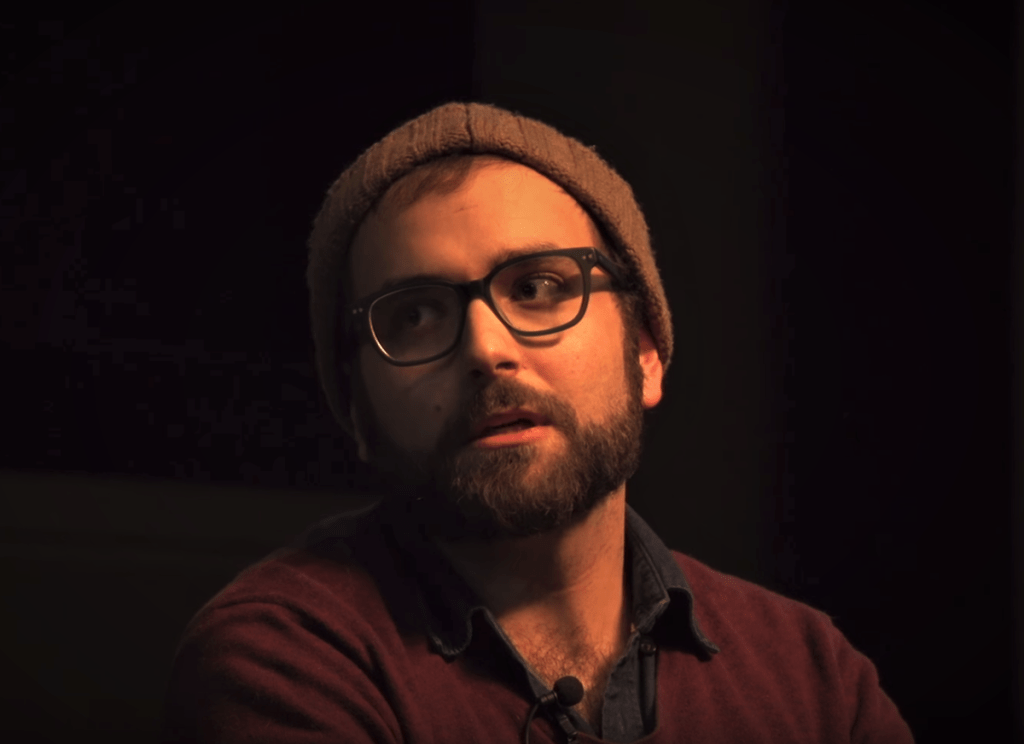
Doc Talk: Stephen Maing (2018)

“As [documentary filmmakers] we have a chance to make something that transcends straight [journalistic] storytelling. We have the opportunity to bear witness to incredibly messy situations and to interrogate our own placement within that.”

Stephen Maing was a Doc Talk guest on September 17th, 2018. He is an Emmy-nominated Brooklyn-based filmmaker. His film Crime + Punishment chronicles the real lives and struggles of The NYPD 12; a group of black and Latino whistleblower cops and the young minorities they are pressured to arrest and summons in New York City.

Crime + Punishment received a Special Jury Award at the 2018 Sundance Film Festival.

Doc Talk: Angela Anderson (Sep. 23, 2019)

The first Doc Talk of this fall 2019 semester was with Berlin based artist and filmmaker Angela Anderson. The works in this screening address the extraction of two highly contested substances – gold and oil – mapping out affective cartographies which are rendered invisible within capitalist calculations of value:

Anderson’s most recent film, “Three (or more) Ecologies: A Feminist Articulation of Eco-intersectionality – Part I: For the World to Live, Patriarchy Must Die” contrasts the highly industrial/technical nature of the destructive fracking industry in North Dakota’s Bakken oil boom on the Ft. Berthhold – Three Affiliated Tribes Reservation with voices from Jinwar, a women’s village project in the autonomous region of Rojava (Northern Syria). The first chapter of this ongoing research project emphasizes the urgent necessity of redefining value and for a societal shift towards relations of empathy and care. The film features interviews with feminist activist and writer, Silvia Federici

In 2013, Angela Anderson and Angela Melitopoulos began documenting the environmental, social and psychological damage inflicted on the region of Halkidiki in north­ eastern Greece by the construction of a massive open pit gold mine by the Canadian mining company Eldorado Gold in the pristine forests of the Skouries­-Kakkavos mountains. Unearthing Disaster I (2013) captures the literal pulverization of the natural and cultural environment and its social form of expression. The video accompanies local activists on a journey through their once ­familiar landscape, transformed into something they no longer recognize.

Angela Anderson is an artist and researcher working at the intersection of the fields of philosophy, ecology, economics, migration, and feminist & queer theory. Recent video works include the audio-visual research projects Unearthing Disaster (2013-2015) and The Refrain (2015) with the video artist Angela Melitopoulos, The Sea Between You and Me (2016) and as a co-author in the project Crossings (2017) by Angela Melitopoulos shown in documenta 14. During 2018-2019 she was an Art and Theory Fellow at Künstlerhaus Büchsenhausen (Innsbruck, AT). Recent exhibitions include Tiroler Kunstpavillion (Innsbruck, 2019), Tallinn Photomonth Biennial (Tallinn, EE, 2019), CAAC (Sevilla, 2018), Minnesota Street Project (San Francisco, 2017), Holbaek Images (Holbaek, DK, 2016) Framer Framed (Amsterdam) and the Thessaloniki Biennale (2015). She is also the exhibition designer for Forum Expanded at the Berlin International Film Festival. She holds an MA in Film and Media Studies from the New School (NYC) and is pursuing her PhD at the Academy of Fine Arts Vienna. Originally from Wisconsin, USA, she lives and works in Berlin.