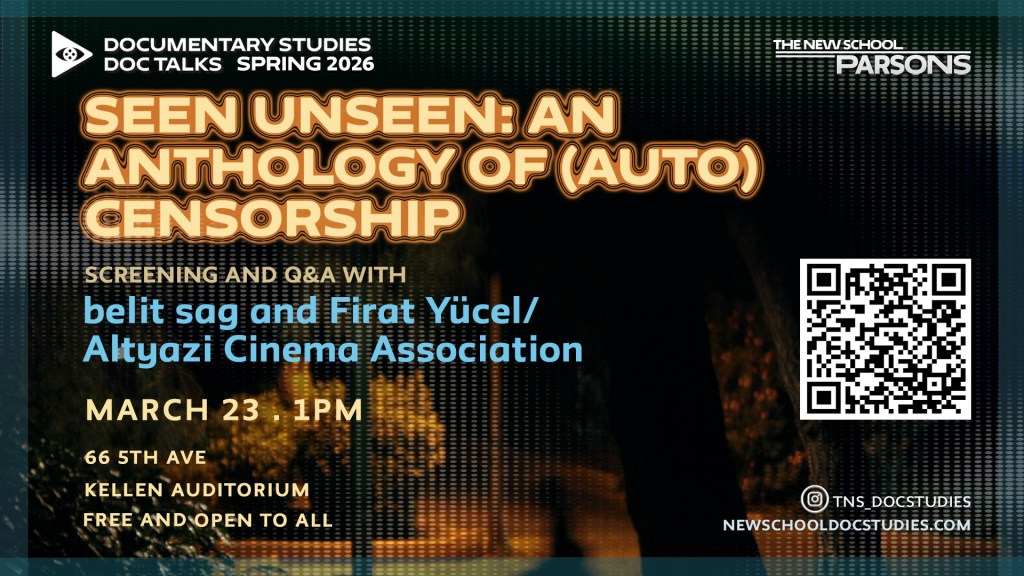
Doc Talk: Silence of Reason with Kumjana Novakova

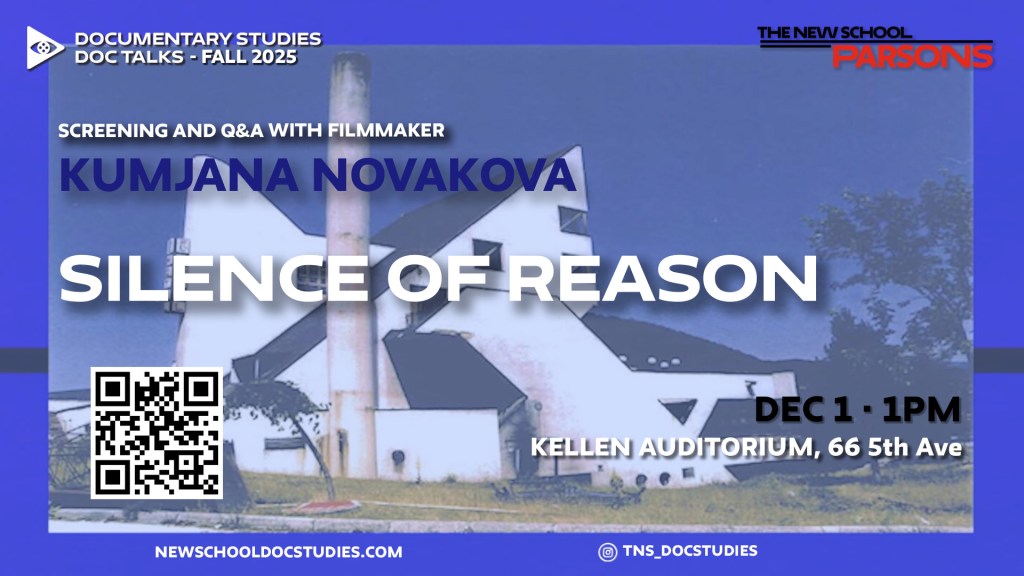
Please join us for a screening and Q&A with filmmaker Kumjana Novakova to discuss her film Silence of Reason on Dec 1st at Kellen Auditorium.

Silence of Reason is a forensic video essay constructed as a performative research into the first international criminal tribunal case to enter convictions for war-time rape as a form of torture and sexual enslavement as a crime against humanity. While working solely with archive and testimonies, the film acts as a memory itself: elusive and fluid, it rejects framing, moving in all directions, spatial and temporal. The singular experiences of violence and torture by women from the Foča rape camps during the war in Bosnia and Herzegovina become our collective memories, surpassing time and space.

Program Duration: 63 min

Note: Following the screening, filmmaker will join remotely via Zoom for the Q&A.

About the Filmmaker

Kumjana Novakova was born in the former Yugoslavia and has worked in film and the arts since 2006. She co-founded the Pravo Ljudski Film Festival in Sarajevo, serving as its chief curator and director, and between 2018 and 2021 she led the Film Department of the Museum of Contemporary Art – Skopje in North Macedonia. Her practice spans cinema and contemporary video art, with a particular interest in how moving images explore identity, memory and the collective self.

Novakova’s work has screened at numerous festivals and venues, including Tate Modern, MoMA, Museum of the Moving Image, IDFA, Cinema du Reel, Punto de Vista, HotDocs, MG+MSUM, etc. Her feature film work includes Disturbed Earth (2021, co-directed with Guillermo Carreras Candi), which was shortlisted for the Academy Awards, and Silence of Reason (2023), which won multiple international awards — including the Grand Prize and Youth Jury Award at the Punto de Vista International Documentary Film Festival (2024), Human Rights Award at the Sarajevo Film Festival in 2024, and the Golden Lily for Best Film at the goEast. 

Currently, she is an associate professor in the Master of Film programme at the Netherlands Film Academy and is pursuing a PhD in Contemporary Arts and Media in Belgrade. She splits her time living between Sarajevo and Skopje.

Please join us for this screening and Q&A, hosted and moderated by Amir Husak, Director of Documentary Studies and Assistant Professor of Media Studies.
Alumni Spotlight: Suzanne Smith (Doc Studies 2013)

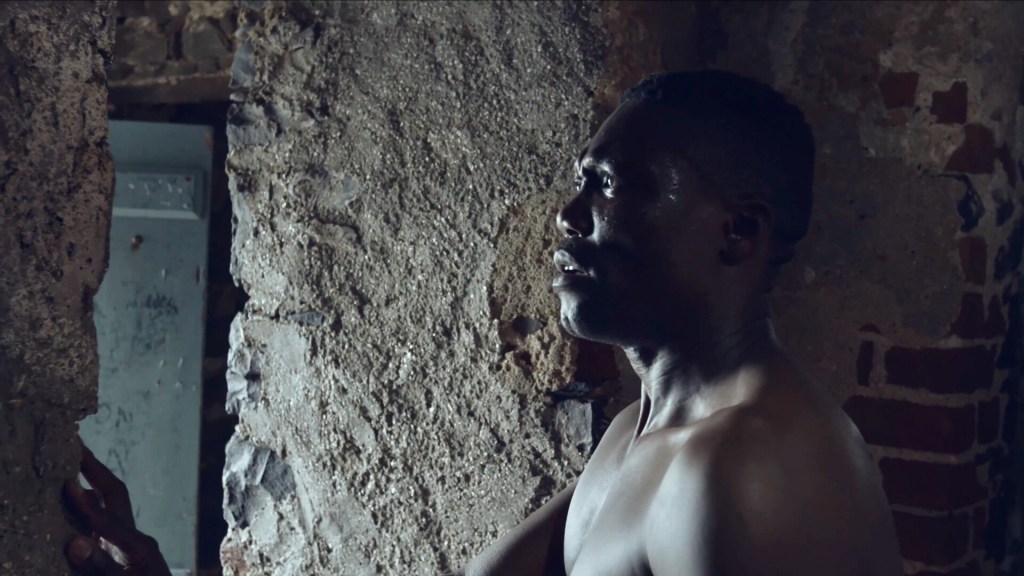
We’re thrilled to share that Suzanne Smith’s short film DOOR OF NO RETURN will have its New York premiere this weekend (Nov 16) at the Video Arts Festival at Cinema Village, as part of the Fragmented World program.

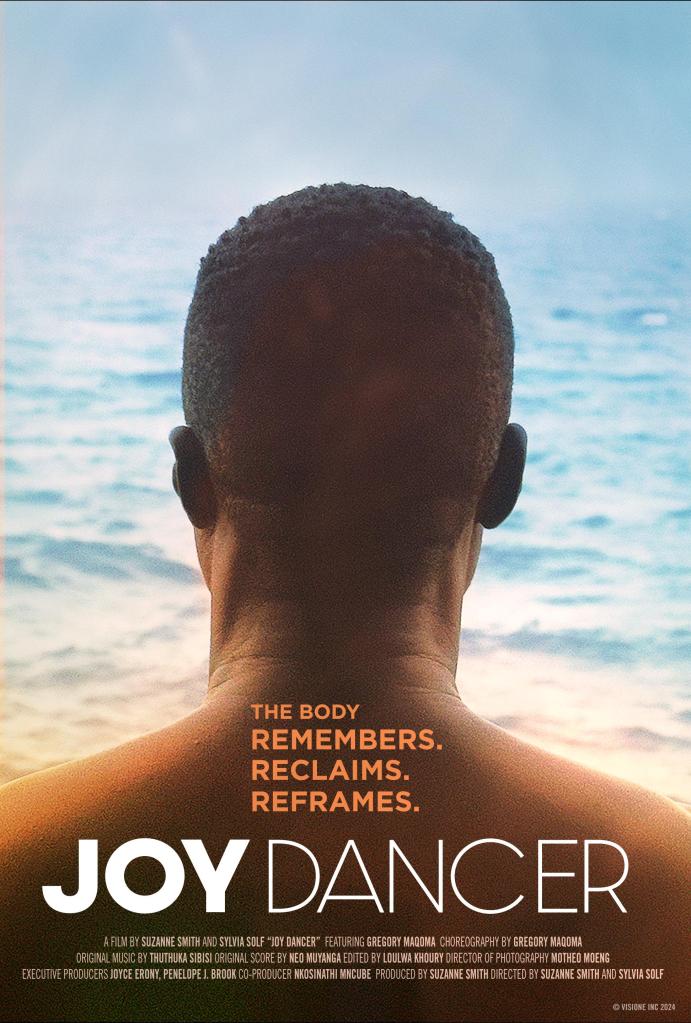
Synopsis: A full body artist, Gregory Maqoma, navigates his own identity through a deeply personal narrative performed at House of Slaves on Goree Island, Senegal, a landmark to one of humanity’s most horrific journeys. Yearning for a way to move through past and present complexities, Gregory’s artistry breaks down walls and reframes history.


Suzanne’s recent work continues to gain international recognition — her feature documentary JOY DANCER premiered at the Edinburgh International Film Festival last year.


Catch DOOR OF NO RETURN in New York this weekend and learn more about the program here: videoart.net/fragmented-world-2025

****If you’re an alum or current student of Doc Studies with news to share, send us a message**** 

Doc Talk: A Body to Live In with Angelo Madsen

Please join us for a screening and Q&A with filmmaker Angelo Madsen to discuss his film A Body to Live In on November 17th at Kellen Auditorium.

The world of queer body modification and its intersection with BDSM is brought to life through this rich portrait of an artist and his philosophy of a spirit-body connection. Merging oral history with 16mm abstraction and photographic meditation, Angelo Madsen’s new film A BODY TO LIVE IN uses the life story and artworks of Fakir Musafar to guide us through pressing questions of belonging and the search for an authentic way of being.

Program Duration: 98 min

About the Filmmaker

Angelo Madsen (formerly Madsen Minax) is a multidisciplinary artist, filmmaker, and educator whose work explores how human relationships are shaped by history, culture, and kinship, with focus on subcultural experience and the politics of desire. His films and installations have screened at Berlinale, Sundance, TIFF, NYFF, MCA Chicago, Museum of the Moving Image, and numerous festivals worldwide. A Creative Capital Fellow (2025), United States Artists Fellow (2023), and Guggenheim Fellow (2022), he has held residencies at Yaddo, MacDowell, Pioneer Works, Headlands, Skowhegan, and the Core Program (MFA Houston). His film North By Current (2021), a New York Times Critics Pick, aired on PBS’s POV, won Cinema Eye and IDA awards, and was praised by Rolling Stone as “a beautiful, complex wonder.” In 2024, the Video Data Bank released CHICAGO SEX CHANGE, a compilation of Madsen’s early works. He is Associate Professor of Time-Based Media at the University of Vermont, based between Burlington and New York.

Please join us for this screening and Q&A, hosted and moderated by Amir Husak, Director of Documentary Studies and Assistant Professor of Media Studies.
Doc Talk: The African Film Institute Presents with Christian Nyampeta

Please join us for a special screening of short films that bring together a range of contemporary voices exploring the everyday, the poetic, and the political in African life through the moving image on November 3rd at 1pm at Kellen Auditorium.

The program is selected and curated by Christian Nyampeta, who will join us for a conversation following the screening.

Presented in collaboration with The African Film Institute, this screening is part of a growing effort to cultivate a sustained and intimate engagement with African cinema in New York. 

The African Film Institute aims to create a home and a place of intimacy with African cinema in New York, through developing gradually and organically a viewing program animated by fellowships; a growing library; an active writers’ room; and an expanding catalog of recorded dialogues. The African Film Institute draws from the visual cultures that view cinema as an evening school: a popular information system in the service of education, aesthetic experience, and public dissemination—employing a methodology concerning the use of cinema’s collective production, and investing in viewing methods informed by different uses of time, visual and textual histories, and social struggles and hopes in mutuality between their own locality and the world at large. 

Program Duration: 70 min

About the Curator

Christian Nyampeta is an artist living in New York, where he organizes programs, exhibitions, screenings, performances, and publications, which are conceived as hosting structures for collective feeling, cooperative thinking, and mutual action. Nyampeta convenes the Nyanza Working Group of ARAC — Another Roadmap School, which participated in documenta fifteen, and he is the convener of Boda Boda Lounge 2022–24, a trans-African film and video art festival. His recent exhibitions include the 14th Shanghai Biennale (2024), Gwangju Biennale, South Korea (2016); Dakar Biennale Dak’Art, Dakar, Senegal (2018); 5th Ural Industrial Biennial of Contemporary Art (2019) and Risquons-Tout, WIELS, Contemporary Art Centre, Brussels, Belgium (2021). Nyampeta was awarded the European Union Prize at the 12th Bamako Encounters — African Biennial of Photography in 2019.

Please join us for this screening and Q&A, hosted and moderated by Amir Husak, Director of Documentary Studies and Assistant Professor of Media Studies.
[Cancelled] Doc Talk – Is this me? Films by Maryam Tafakory

** As of May 5, 2024, the artist has cancelled this event in solidarity with the students demanding divestment from Israel, who were arrested and suspended after the police were called to clear the solidarity encampments. **


Join us for a virtual screening and Q+A with filmmaker, Maryam Tafakory, to discuss her films Mast-delIrani BagNazarbazi, and Chaste/UnChaste

Through collages of original and found footage, Tafakory’s films reflect on identity and the censorship of intimacy and sexuality in post-Revolution Iran. Mast-del explores queer identity inside and outside of post-Revolution Iran through altered visuals, new and archival. Irani Bag is a video essay, focusing on the restriction of physical intimacy and demonstrating to its viewers “how to touch without touching.” Nazarbazi tells a story of desire, control, and love in Iran through a collage of found footage. Chaste/UnChaste examines the limitations of labeling women’s bodies as chaste/unchaste through depiction of Iranian women in film.  


Maryam Tafakory [b. Shiraz/Iran] works with film and performance. Screenings of her work include MoMA, Tate Modern, Cannes’ Directors Fortnight, New York Film Festival, Locarno, Toronto International Film Festival, FICUNAM, Oberhausen, and Anthology Film Archives, amongst others. She was awarded the Gold Hugo at the 58th Chicago Int’l Film Festival, the Tiger Short Award at the 51st IFFR, the Barbara Hammer Feminist Film Award at the 60th Ann Arbor Film Festival, and the Best Experimental Short Film at the 70th and 71st Melbourne International Film Festival, amongst others.


Presented by the Graduate Certificate in Documentary Media Studies at the School of Media Studies at the Schools of Public Engagement.

Doc Talk (In-Person) – Richland by Irene Lusztig

This Doc Talk featured a screening and Q&A with filmmaker Irene Lusztig to discuss her film, Richland.

Built by the US government to house the Hanford nuclear site workers who manufactured weapons-grade plutonium for the Manhattan Project, Richland, Washington is proud of its heritage as a nuclear company town and proud of the atomic bomb it helped create. RICHLAND offers a prismatic, placemaking portrait of a community staking its identity and future on its nuclear origin story, presenting a timely examination of the habits of thought that normalize the extraordinary violence of the past. Moving between archival past and observational present, and across encounters with nuclear workers, community members, archeologists, local tribes, and a Japanese granddaughter of atomic bomb survivors, the film blooms into an expansive and lyrical meditation on home, safety, whiteness, land, and deep time.

Moderated by Lana Lin, Director of the Graduate Certificate in Documentary Media Studies. Co-produced with Documentary Program Associates Adriana de Lucio (Media Studies ’24) and Johann Yamin (Media Studies ’24).


Irene Lusztig is a feminist filmmaker, archival researcher, educator, and amateur seamstress. Her work brings historical materials into conversation with the present, inviting viewers to contemplate questions of politics, ideology, and the complex ways that personal, collective, and national memory are entangled. Her films have been screened around the world, including at the Berlinale, MoMA, Film Society of Lincoln Center, Museum of Fine Arts Boston, Anthology Film Archives, Pacific Film Archive, Flaherty NYC, IDFA Amsterdam, Hot Docs, AFI Docs, BFI London Film Festival, Melbourne Film Festival, DocLisboa, and RIDM Montréal. She has been awarded fellowships from the Guggenheim Foundation (2021), the Radcliffe Institute for Advanced Study, the Fulbright, two MacDowell fellowships, the Flaherty Film Seminar, and the Rydell Visual Arts Fellowship. She is Professor of Film and Digital Media at UC Santa Cruz.


Presented by the Graduate Certificate in Documentary Media Studies at the School of Media Studies at the Schools of Public Engagement.

Doc Talk (In-Person w/ Zoom Q&A) – Chimeras of the Cine-machine: Films by Ana Vaz

This Doc Talk featured a screening and Q&A with filmmaker Ana Vaz to discuss her short films Apiyemiyekî?Amérika: Bahía de las FlechasHa Terra! There is Land!Look closely at the mountains, and Atomic Garden. Following the in-person film screening, Vaz joined virtually via Zoom for the Q&A. 

Vaz’s films activate and question cinema as an art of the (in)visible and instrument capable of dehumanising the human, expanding its connections with forms of life — other than human or spectral. Apiyemiyekî? addresses the genocide of the Waimiri-Atroari people in 1970s through illustrations created by the indigenous population which refer us to the present day. In present-day Dominican Republic, Amérika: Bahía de las Flechas revisits Lake Enriquillo where Christopher Columbus landed in 1492 and confronted the native Taíno people to establish the first European settlement in America. Há Terra! is set in the Brazilian bush where land and character, predator and prey encounter one another in a chase, a hunt, and a tale of looking and becoming. Look closely at the mountains compares the dire mineral extraction issue in Brazil with a different outcome in Nord-Pas-de-Calais in France, where such extraction has ceased. Atomic Garden explores an elderly Japanese woman’s contaminated garden after the nuclear catastrophe of Fukushima.

Moderated by Lana Lin, Director of the Graduate Certificate in Documentary Media Studies. Co-produced with Documentary Program Associates Adriana de Lucio (Media Studies ’24) and Johann Yamin (Media Studies ’24).


Ana Vaz is an artist and filmmaker born in the Brazilian highlands. Recent film festivals include Locarno Film Festival, Cineasti del Presente (Switzerland, 2022); Berlinale, Forum Expanded (Germany, 2023, 2021, 2020); MoMA Doc Fortnight (New York, USA, 2023); CPH:Dox (Copenhagen, Denmark, 2023); IFFR (Rotterdam, The Netherlands, 2023, 2020); Viennale (Austria, 2022); Mostra Internacional de Cinema em São Paulo (Brazil, 2022); Jeonju International Film Festival (South-Korea, 2023); Indie Lisboa, International competition (Portugal, 2023). Her work has also been shown at Jeu de Paume (Paris, France), Instituto Moreira Salles (São Paulo, Brazil), Courtisane (Ghent, Belgium), Whitechapel Gallery (London, UK), TIFF Cinemathèque (Toronto, Canada), and Flaherty Film Seminar (Hamilton, USA). She is a founding member of the collective COYOTE, an interdisciplinary group working in the fields of ecology and political science through an array of conceptual and experimental forms.


Presented by the Graduate Certificate in Documentary Media Studies at the School of Media Studies at the Schools of Public Engagement.

Certificate in Documentary Media Studies is On Hiatus for the 2024-2025 Academic Year

The Documentary Media Studies Graduate Certificate will be on hiatus in Fall 2024-Spring 2025 semesters.

We encourage those interested in The New School’s 2-year Masters Program in Media Studies to apply for admission for Fall 2024 and to pursue the Documentary Certificate in their second year of study. Applications to the Documentary Certificate for students seeking to enter in Fall 2025 will open in September 2024.